Tile Busters: Match 3 Tiles
- 4.5
- Rating
- 1.00M
- Installs
- Free
- Price

 Analysis by App-foxy
I picked up Tile Busters: Match 3 Tiles expecting a simple way to pass a few spare minutes, and that is still the role it fills best for me. It is a free puzzle game from Spyke Games built around arranging matching tiles and clearing boards. The idea is immediately understandable, but the appeal comes from deciding what to remove first, keeping the available spaces under control, and trying not to turn a manageable board into a dead end.
That makes it a useful choice for short breaks rather than a game I would recommend as a deep strategy experience. I can play a round while waiting for an appointment, stop after a single puzzle, and return later without needing to remember a complicated story or control scheme. At the same time, the familiar match-three foundation means the game has to work harder than a basic matching toy to keep my attention. Its early goals, visible progress, and gradually more demanding decisions do most of that work.
How the early puzzles build a useful routine
The opening experience is easy to approach because the central action needs little explanation: look for identical tiles, make a match, and clear space. I like that the first few decisions feel readable rather than overwhelming. Instead of asking me to learn several unrelated systems at once, the game lets the board itself teach the rhythm. I can scan the available tiles, notice a possible set, and see how one removal changes the choices around it.
You May Also Like

 Blood Strike: 2.5 Anniversary
Blood Strike’s Loadouts Turn Every Drop Into a Tactical Gamble
A close look at Blood Strike’s custom loadouts: how fast access to signature weapons reshapes its battle royale rhythm, rewards preparation, and narrows the gap between fights.

 Pandora - Music & Podcasts
Pandora’s Music Is Easy to Start, but Harder to Recover
Pandora’s strength is its low-effort path from a seed to a station. Its weak spot is how much confidence it asks you to place in connection, setup, and quiet recovery.

 8 Ball Pool
 Is Built on Rivalries, Rematches, and Routine
A close look at the rivalries, rematches, shared routines, and unanswered safety questions that turn a quick pool match into a persistent mobile community.

 Samsung Music
’s Quiet Strength Is Playing What You Already Own
Its reach comes less from spectacle than from dependable access to a personal library. That simplicity is both the app’s strongest retention engine and its ceiling.

 AccuWeather: Weather Radar
AccuWeather Review: A Quick, Clear Forecast for Everyday Decisions
For everyday plans, the best forecast is the one you can understand quickly. AccuWeather makes rain timing, radar, and local conditions easy to act on, with a few trade-offs.

 Hill Climb Racing
Why Hill Climb Racing Still Turns Crashes Into One More Run
A tiny car, a bumpy hill and one more upgrade: Hill Climb Racing keeps resurfacing because its simple chaos makes every near-miss feel personal.
More From Our News Desk



That simplicity is important for a casual puzzle game. I do not need a long tutorial before understanding why a move is good or bad. The early goal is essentially to keep matching and solving the current arrangement, which gives each board a clean, immediate purpose. This is not the kind of game where I play for a narrative objective; I play because the next clear is always visible and close enough to pursue.
There is also a small mental reset in the way the game separates one puzzle from the next. If I make a poor choice, I am not carrying a complicated campaign decision into the following session. I can finish a board, put the phone down, and come back when I want another compact challenge. That makes it particularly suitable for commuting, short waiting periods, or a few quiet minutes before bed.
My practical advice is to avoid tapping the first obvious match automatically. I get better results when I spend a moment checking whether a tile is part of a larger sequence or whether removing it will expose a more useful combination. That habit matters more than speed. The game rewards a calm scan of the board, and rushing can leave awkward pieces occupying the spaces needed for later matches.
Why the progress feels visible even without a story
The strongest progress signal is the board changing in front of me. Every successful match reduces clutter and confirms that my previous decision worked. That may sound modest, but it gives the game a satisfying loop: identify an opportunity, remove tiles, reassess the layout, and work toward a clean finish. I always know what I am trying to accomplish in the immediate moment.
The broader sense of progress comes from moving through puzzles rather than building a character or collecting a narrative history. For players who prefer direct goals, this is a strength. I am not distracted by dialogue or a large menu of activities. For players who need a strong story, social competition, or a long-term creative project, the same focus may feel limited.
I also found that the visual state of a board acts as a useful warning system. A crowded arrangement invites patience, while a nearly cleared board encourages me to protect the remaining options. This creates a simple but meaningful distinction between progress and safety: removing tiles is good, but removing the wrong tiles can make the final portion harder. That is one of the less obvious reasons the basic matching format remains engaging.
The game is free to download and is suitable for Everyone, so it is easy to recommend as a low-commitment puzzle option for a broad audience. Its audience is already substantial, with over a million installs, and it holds a 4.5 average from around 30 thousand ratings. Those figures do not guarantee that every player will enjoy the pacing, but they fit my impression that the game is designed to be approachable first and demanding second.
Where the difficulty curve starts asking for attention
At the beginning, I can rely on recognition. I see a matching group, make the move, and continue. As the boards become less forgiving, recognition alone is not enough. I need to think about order. A match that looks attractive now may remove a useful option, while a less obvious move can open the board for a better chain of decisions.
This is where the game becomes more than a reflex exercise. The challenge is not based on complicated controls; it comes from managing limited room and reading consequences. I often pause before a move when several matches are available, especially if one choice seems to block the area where I expect the next useful tile to appear. The best approach is to treat each move as preparation for the next one, not as an isolated clear.
The pacing works well for players who enjoy a gentle increase in mental pressure. It does not require me to memorize a large rulebook, yet it can still make a familiar board feel tense when the remaining spaces are poorly arranged. That balance is a good fit for casual puzzle fans who want more thought than a purely automatic matching game provides.
However, anyone looking for a consistently demanding logic challenge may find the early portion too relaxed. This game is not my first choice when I want elaborate deduction, unusual puzzle rules, or a single difficult problem that demands sustained concentration. A dedicated logic title is usually better for that mood. Tile Busters works best when I want repeated, self-contained decisions with a clear visual payoff.
Small decisions that improve a typical session
One useful workflow is to divide the board into zones instead of scanning everything randomly. I look for matches near crowded areas first, because clearing those spaces can give me more flexibility. I then check whether a move near the edge will help or merely shift the problem elsewhere. This simple order of operations makes the game feel less frantic and helps me avoid wasting a promising match.
Another tip is to preserve flexibility when the board is already close to completion. It is tempting to remove any available set immediately, but the last few tiles can be the most awkward if I have used up the convenient matches. I prefer leaving more than one possible route whenever I can. That does not guarantee a perfect outcome, but it gives me a better chance of recovering from an imperfect earlier choice.
I also recommend playing in short, focused sessions rather than treating every puzzle as a race. The game’s relaxed presentation encourages a calmer pace, and I make fewer careless decisions when I stop trying to clear tiles as quickly as possible. For a phone game, that is a meaningful advantage: the challenge comes from attention and planning, not from demanding constant rapid input.
What sustains play, and where the design can feel pressuring
The retention loop is straightforward. I solve a board, see the result of my decisions, and feel ready to try another. The next puzzle provides a fresh arrangement without asking me to relearn the basic interaction. That repeatable structure is why I can imagine opening the game regularly for brief sessions. It gives me a small goal that is easy to understand and satisfying to complete.
The trade-off is that this kind of loop can become repetitive if I need a lot of variety from a puzzle game. The matching action remains the center of the experience, so players who quickly tire of sorting similar tile groups may not find enough change to stay interested. I would not choose it for a long uninterrupted gaming session unless I was specifically in the mood for this type of board-clearing routine.
In-app purchases range from $0.99 to $249.99 per item, which is the main point I would consider before recommending it to someone who wants a completely frictionless free experience. The game itself is free, but the presence of optional purchases means I would be careful around spending prompts and set a personal limit before playing. A free download is not the same thing as a game with no monetization pressure.
That distinction matters most for younger players or for anyone who tends to make impulse purchases during a difficult level. Since the age rating is Everyone, families may find the game approachable, but I would still use the device’s purchase controls and discuss spending expectations in advance. The puzzle design is accessible; the financial side deserves the same deliberate attention as the board itself.
My other reservation is emotional rather than technical: a puzzle that looks simple can become surprisingly annoying when one poor move leaves an awkward finish. I appreciate that tension when I am patient, but it can work against the relaxing mood suggested by the game’s presentation. If I am tired or distracted, I am more likely to blame the board than enjoy the planning. In those moments, a gentler matching game may be a better fit.
Who will appreciate it most
I would recommend Tile Busters to someone who wants a compact puzzle habit with clear visual goals. It suits players who enjoy matching games but want to think about order and space rather than simply making the fastest available combination. It is also a good option for people who prefer games that can be paused naturally after a board instead of requiring a long commitment.
It may work especially well for a daily waiting-room routine. I can imagine opening it while waiting for a train, playing one puzzle with sound turned down, and closing it when my turn arrives. The game does not demand that I follow a plot or coordinate with other players, so the interruption does not ruin the experience. That independence is one of its most practical strengths.
I would be more cautious about recommending it to players who want competitive rankings, a strong social layer, or a substantial adventure around the puzzles. It is also not ideal for someone seeking an endlessly fresh set of mechanics. Compared with a traditional match-three game focused on special effects and rapid combinations, this one feels more centered on arranging and clearing tiles thoughtfully. Compared with a pure logic game, it is lighter and more immediately accessible.
Device compatibility is reasonably broad: the current version is 4.0.5 and it runs on Android 7.0 or later. That makes it a realistic choice for people using older Android phones, although the experience will still depend on the device’s general condition and screen responsiveness. I would install it on a secondary or older phone without expecting the game’s basic concept to require modern hardware.
My verdict on the progression and pacing
After spending time with it, I think the progression succeeds because it turns a very small set of actions into a sequence of increasingly careful choices. The early goals are clear, the board provides constant feedback, and the challenge grows through decision order rather than through a pile of complicated rules. That gives the game a pleasant learning curve for casual players.
Its limitations are equally clear. The core activity can feel repetitive, and the relaxed puzzle rhythm may not satisfy players who want dramatic variety or a demanding strategic campaign. The optional purchase range also means I would not describe the free download as entirely free from monetization considerations. These are not deal-breakers for me, but they affect who I would suggest it to.
Overall, I see this as a dependable match-and-clear puzzle for short sessions, especially when I want something more thoughtful than mindless tapping but less involved than a serious logic game. Spyke Games has kept the central idea easy to learn while giving each board enough consequence to make me pause before committing. If that balance sounds appealing, I think it is worth trying. If you need deep variety, social competition, or a completely pressure-free free-to-play experience, I would look elsewhere.
My recommendation: try it for its calm, accessible board-solving loop, but approach the later challenge and optional purchases with realistic expectations. It is at its best when I treat each puzzle as a small exercise in planning, not as a race to clear everything immediately.
FAQs for Tile Busters: Match 3 Tiles
01What is Tile Busters: Match 3 Tiles, and how is the gameplay designed?
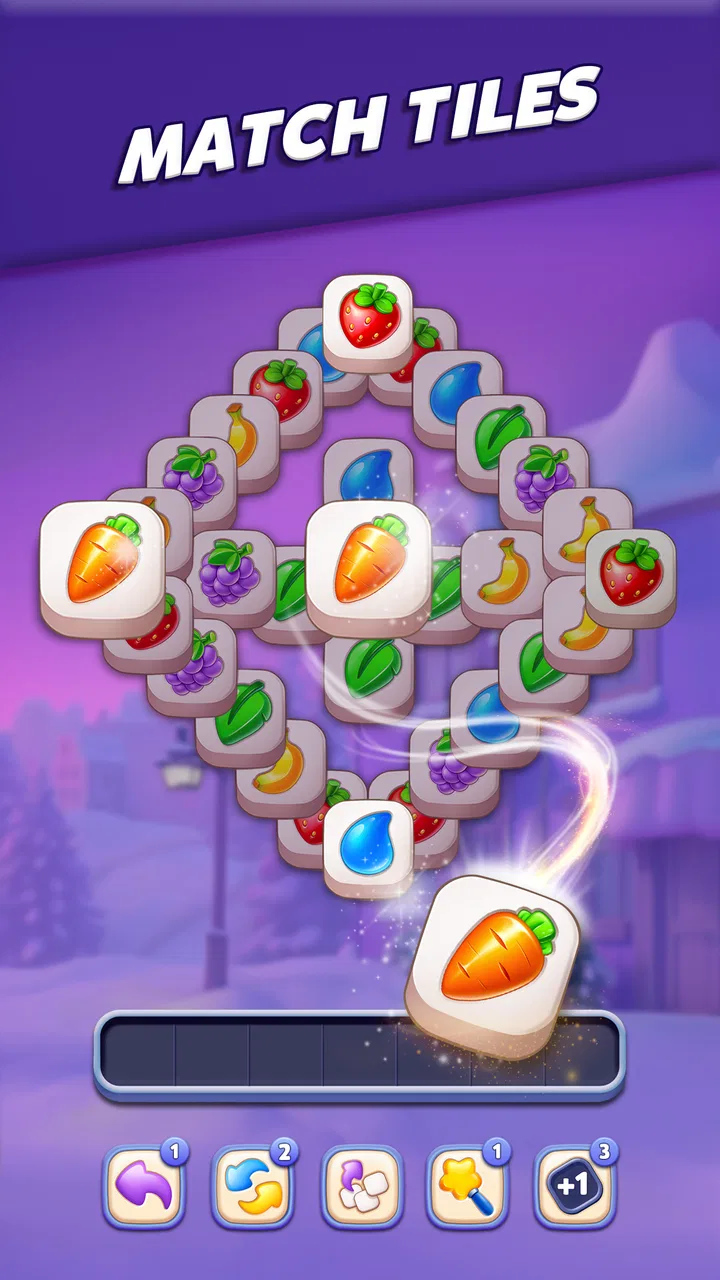
Tile Busters: Match 3 Tiles is a casual puzzle game based on matching identical tiles. You tap tiles to place them in a limited tray, and matching three of the same kind clears them from the board. The main challenge is planning your moves carefully, because filling the tray can end the level. As stages progress, layouts become more complicated and obstacles require better strategy rather than simple fast tapping.
02Is Tile Busters: Match 3 Tiles free to download and play?
The game can generally be downloaded and played without an upfront purchase, making it accessible for casual players who want to try a few levels immediately. However, free gameplay may include advertising, optional in-app purchases, or both. These purchases can sometimes provide boosters, extra moves, or other conveniences. Before spending money, it is worth checking the current store listing and reviewing the purchase settings on your device.
03Does Tile Busters: Match 3 Tiles require an internet connection?
Some parts of Tile Busters: Match 3 Tiles may work without a constant internet connection, which is useful when traveling or playing in areas with weak service. Nevertheless, online access may be needed for advertisements, special events, cloud synchronization, updates, rewards, or certain account-related features. Offline availability can also change between versions, so players should test the game after installation rather than assuming every mode will function without connectivity.
04Are there advertisements or optional purchases in Tile Busters: Match 3 Tiles?
Players should expect the possibility of advertisements and optional in-app purchases, as these are common in free-to-play puzzle games. Ads may appear between levels or after choosing a reward, while purchases can offer boosters, additional lives, coins, or other advantages. The game remains approachable without spending money, but progress may feel slower at difficult stages. Parents should also review device purchase restrictions before allowing children to play.
05Is Tile Busters: Match 3 Tiles suitable for children and casual players?
Tile Busters: Match 3 Tiles is easy to understand and generally suitable for casual players who enjoy short, relaxing puzzle sessions. The matching rules are simple, although later levels can become more demanding and may require patience and forward planning. Suitability for children also depends on the advertising, purchase options, and privacy practices shown in the current version. Adults should check the age rating and supervise younger players when necessary.
Pros
- Quick match-3 rounds are ideal for short breaks.
- Tile-matching mechanics are easy to learn for new players.
- Increasing difficulty keeps later levels challenging.
- Offline play makes it convenient during travel or commutes.
- Bright visuals and satisfying effects make matches feel rewarding.
Cons
- Some levels may depend heavily on luck rather than planning.
- Limited moves can make certain puzzles feel frustrating.
- Progress may slow if boosters or extra attempts are restricted.
- Frequent events and rewards can make the interface feel busy.
- The game may become repetitive after extended play sessions.

Tile Busters: Match 3 Tiles
Gallery